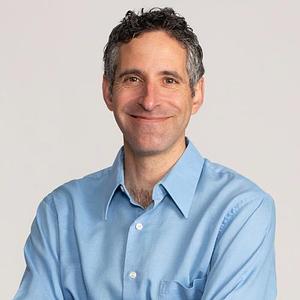
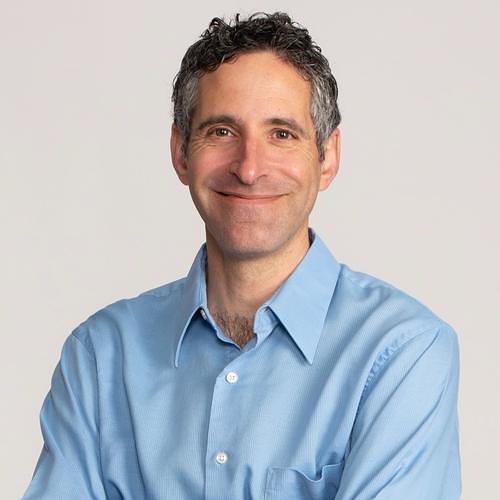
A conversation with the Chief Medical Officer of Automate Clinic on clinical AI, physician entrepreneurship, and what it means to practice medicine at scale.
Your career has taken you from hospitalist medicine to telemedicine to building an AI company. What experiences shaped your conviction that medicine needed to extend beyond the exam room?
My career has been defined by watching the same preventable failures repeat across different care settings. As a hospitalist, I admitted patients every shift who shouldn't have needed hospitalization if someone had caught their condition earlier. In clinic, I saw the opposite: patients who dismissed serious symptoms for weeks because they didn't know when to seek care. Then I spent years doing telemedicine, where a significant portion of my time went to determining that patients needed in-person evaluations. I became frustrated — I was essentially acting as expensive triage.
The pattern became impossible to ignore. The bottleneck in healthcare isn't just physician supply. It's that we're using physicians for work that doesn't require our expertise while patients who desperately need clinical judgment can't access us. I realized that extending medicine beyond the exam room meant building systems that could guide people to the right care at the right time, preserving physician capacity for cases that actually require our training. That's not just more efficient — it's the only way healthcare scales to meet demand without burning out every physician in the process.
Automate Clinic describes itself as a place where physicians train and shape healthcare AI. How did that vision take root?
The vision came from recognizing a fundamental mismatch. AI companies were building healthcare tools using generic benchmarks that measure whether a system can memorize medical information — not whether it can handle the clinical uncertainty physicians navigate daily. They'd report 85% accuracy
without understanding that the 15% failure rate might include every high-acuity case that actually matters.
Physicians hear but it's not zero
where engineers hear that's only 3%.
That gap is the difference between technology that works in demos and technology that's safe for patients. We built Automate because healthcare AI needs physician-led evaluation focused on clinical failure modes, not just statistical performance. The models being deployed right now will shape how millions of people access healthcare. If we don't ensure they handle real clinical complexity before they scale, we're setting up for systematic harm at a scale medicine has never seen.
For readers hearing about Automate Clinic for the first time, how would you describe what you do?
Automate Clinic is clinical quality control for AI models. We're not a generic labeling service or a crowd of non-physicians clicking through tasks. We're a network of practicing, board-certified U.S. physicians who evaluate healthcare AI the way physicians would evaluate any clinical tool: by identifying where it fails, why those failures matter, and what needs to change before it touches patients.
The fundamental difference is that we focus on failure modes, not just accuracy scores. A company might tell you their symptom checker is 90% accurate. We tell you it misses pulmonary embolism risk factors in conversational triage, sends high-acuity chest pain to self-care 8% of the time, and performs differently across patient demographics. That granular, clinically relevant evaluation is what actually makes AI safe for deployment. We're building the evaluation infrastructure that should have existed before any of these tools launched.
What do you see as the most inspiring opportunity for physicians in the age of AI?
The opportunity to finally practice at the top of our license. For my entire career, I've watched physicians spend enormous amounts of time on work that doesn't require our expertise: basic triage masquerading as telemedicine visits, unnecessary ER evaluations, administrative documentation that takes longer than the actual patient encounter. AI doesn't replace what physicians uniquely do — it handles the work that's been consuming us and preventing us from doing the complex clinical reasoning we trained for.
The inspiring part is that physicians who understand how to evaluate, shape, and deploy these tools will define how medicine evolves. This isn't about technologists building healthcare's future without us. It's about physicians who understand both clinical practice and AI evaluation becoming the ones who ensure these systems actually serve patients. That's not just a career opportunity — it's a chance to fix what's been broken about healthcare delivery for decades.
What's the most overlooked opportunity in healthcare right now?
Clinical co-creation, not just validation. Most AI companies treat physicians as validators who check work after it's built. The real opportunity is physicians working alongside AI development from the start — identifying the clinical problems worth solving and defining what good
looks like before anyone writes code.
Healthcare AI keeps solving the wrong problems because engineers build what's technically interesting rather than what's clinically essential. We need physicians in the room when someone decides to build a diagnostic tool, asking: What failure mode actually harms patients? What edge case will this miss? What does safe deployment look like for this specific use case? That upstream involvement — where physicians shape what gets built rather than just checking it afterward — is where AI could actually transform healthcare instead of just automating our current dysfunction.
Entrepreneurship is often seen as risky or inaccessible for physicians. What do physicians most misunderstand about building companies?
Physicians think entrepreneurship requires abandoning medicine. That's backwards. The biggest mindset shift was realizing that building a company is practicing medicine at scale. Every patient I see in clinic gets my expertise for one encounter. Building systems that improve how millions of people access healthcare is clinical practice with leverage.
The misunderstanding comes from how we're trained. Medical education teaches us that good physicians focus on the patient in front of us and everything else is distraction. But that mindset only works if the system around us functions. When the system is broken, fixing it isn't a departure from medicine — it's the highest expression of our clinical training.
Physicians have unique insight into what's broken and why. Not using that insight to build solutions isn't noble dedication. It's wasted expertise. The risk isn't building something. The risk is spending 30 years frustrated by problems you could have solved but didn't because you thought that wasn't real medicine.
What mindset would you encourage physicians to adopt as they think about their next chapter?
Embrace that clinical expertise is becoming more valuable, not less. The physicians who thrive in the AI era won't be the ones fighting to prove they're irreplaceable. They'll be the ones who understand that AI makes genuine clinical judgment even more essential by handling everything else.
If you're uncertain about where medicine is headed, the best response is to get involved in shaping it. Learn how these systems work. Evaluate them critically. Identify where they fail. The physicians defining healthcare's future aren't the ones with the most technical AI knowledge — they're the ones who understand clinical practice deeply enough to spot what technology misses.
Your clinical training isn't becoming obsolete. It's becoming the most valuable skill for ensuring AI actually serves patients instead of just automating our current failures at scale. Don't opt out of this transition. Medicine needs physicians who understand both clinical practice and AI evaluation more than it's needed anything in decades.
How can physicians get involved with Automate Clinic today?
Apply to join our Faculty community. We've built a network of board-certified physicians who are actively shaping healthcare AI evaluation. This isn't about becoming an AI expert or learning to code — it's about bringing your clinical expertise to evaluate healthcare AI systems, identify failure modes that matter, and help companies build tools that are actually safe before they scale.
We're looking for physicians who are curious about AI, passionate about clinical excellence, and ready to help define what quality and safety look like in healthcare AI systems. The work is intellectually engaging, well compensated, and directly impacts how millions of people will access healthcare.
You can learn more and express interest at Automate Clinic. We're selective about who joins because the quality of our physician network is what makes our evaluation work credible. If you understand that physician expertise is essential to ensuring AI serves patients safely, this is where that conviction becomes action.
This interview is part of the Mozibox Voices of Physicians series, featuring physicians who are shaping the future of medicine beyond the traditional career path.