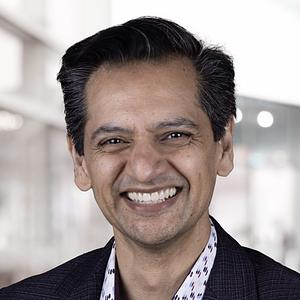
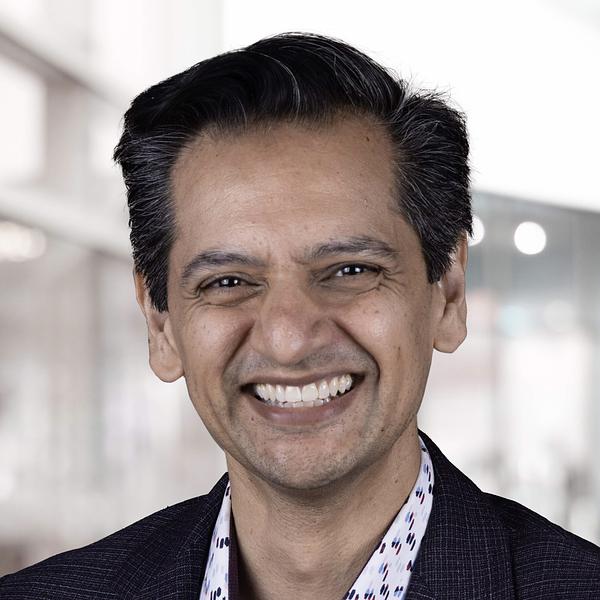
Mehul Mankad, MD, is the Chief Medical Officer at NovumHealth, a value-based behavioral healthcare organization. In this Voices of Physicians interview, he shares how a two-year survival plan turned into a decade-long career at the VA, what it really takes to move from clinical practice into the C-suite, and why physicians should never stop learning.
Tell us about your career journey and the key inflection points that shaped your path.
My first job after completing fellowship happened at an academic VA medical center where I was asked to serve as medical director for the emergency department's mental health services. Morale had reached its nadir on that service, and residents were rating the rotation as one of the lowest experiences of their four-year training cycle. I was hoping I could survive two years in that position!
Turns out that residents were excited about seeing patients but found that the scaffolding around their clinical work was unhelpful. I started by converting morning rounds into an energetic learning experience. Then I borrowed approaches for bedside resident supervision from emerging models in undergraduate medical education, and (clutch your pearls!) I saw patients myself when residents were overwhelmed by volume. By the end of my first year, the rotation was ranked as the top experience in the program. My real takeaway from those early years was the realization that one person really can affect change, even in large, bureaucratic systems that appear inflexible on the surface. In any new job, it's important to quickly identify structural elements that one can impact and address them as fast as possible.
Fast-forward a decade, and I'm still working at the VA, surpassing my personal goal of surviving two years! Taking on the position of Chief of Psychiatry was a different sort of opportunity. In my opinion, a good leader designs systems that can function without their direct involvement. Over time, incremental improvements to VA mental health services had created a bloated, cumbersome consult menu that no one, including people inside the department, could understand. It may sound simple, but streamlining the intake process for newly referred patients was a three-year endeavor. Much of our redesign involved bringing key opinion leaders together to explain why changes were necessary prior to making them. My takeaway from this experience — to make sustainable improvements, begin with buy-in from stakeholders.
A more recent lesson for me occurred about seven years ago. Having spent a decade and a half immersed in healthcare delivery, I was curious what was next. Several problems that bother all physicians were at the top of mind — fragmentation, resource allocation, physician burnout, and attrition. As the quality improvement expert W. Edwards Deming stated decades ago, Every system is perfectly designed to get the results it gets.
I realized that my undiscovered country lay in the domain of healthcare finance. As I transitioned from a clinical focus to working at a payor organization, Alliance Health, I realized that my training and clinical experience were woefully inadequate to penetrate the complex domain of health insurance. And this realization served as my final takeaway — stay hungry for lifelong learning and don't assume that expertise in one domain directly translates to another.
What do you do as the Chief Medical Officer at NovumHealth, and what does your day-to-day look like?
NovumHealth is a value-based behavioral healthcare organization, and I've been fortunate to serve as CMO for the past four years. In this regard, we have twin, overlapping missions — identify and serve high-risk individuals who are struggling on a day-to-day basis but also improve mental healthcare for all of our patients. As a startup company, the pace is quick, and terra firma is sometimes elusive. My role as the Chief Medical Officer involves setting policy at a strategic level while also working at all levels of the organization tactically to ensure that our goals are met. Day-to-day varies tremendously as it could be consumed with refinement of our clinical model, it could be immersion in case consultation with our frontline staff, or it could be externally facing with healthcare partners.
How did you transition from clinical practice into your first Chief Medical Officer role at Alliance Health?
I love this question! As I was moving from clinical leadership to payor leadership there were certainly some skills that were transferrable, and I'll mention them below. However, the language and rules of the corporate world were foreign to me, and I am deeply in debt to my executive coach for serving as my guide. Meeting with him weekly for the first few months of my transition left an indelible mark. We maintained a there are no stupid questions
atmosphere during our sessions, and I am grateful for it.
Which skills or experiences from your clinical career turned out to be the most transferable to the CMO role?
Something inherent in the design of medical school is the assumption that 100% of graduates will be comfortable carrying some degree of risk on their shoulders. Patients, support staff, administrators, and physicians from other specialties look to you for expertise regarding life-threatening diagnoses and complex treatments. You are trained to reflect back an earned measure of confidence and competence. This ability to weather storms is so deeply ingrained in medical school training that we may forget about it. It is our superpower, but it also has risks. Sometimes we mistake our ability to tolerate medical complexity for our ability to navigate corporate environments. While they overlap, there are distinct differences!
What advice would you give physicians who are actively applying to their first leadership roles?
Leadership roles abound for physicians, and most of us find ourselves leading whether we carry a title or not. If you supervise staff in clinic who execute your orders, then you are leading. If you prescribe treatments that must be delivered by others, then you are leading. If you speak up at a conference to ask a question that needs clarification, then you are leading. My recommendation to all physicians is that you lean into your natural role as a medical leader. Supplement your lifetime of experiential learning about leadership with structured education — be it didactic, written, or formal mentorship. The safest crucible for these early leadership roles occurs inside the healthcare cloister. Medical directorships, medical society committee chairs, or other circumstances that value your expertise are all around you. Try them out, document them in your curriculum vitae, and leverage those roles into the next phase of your career.
For physicians considering a similar career transition, what are one or two practical steps they could take in the next 6–12 months to prepare?
The first practical step I would recommend is an honest appraisal of your skills set and your willingness to obtain additional skills. For example, I undertook a four-month course in data analytics prior to my current role so that I could have more meaningful collaborations with our data science team. A simultaneous practical step would be an organized search strategy. Mozibox is a fantastic tool that I wish existed when I started this journey nearly a decade ago. As you apply for new roles, track and catalog them. It is easy to get discouraged as the world outside of healthcare functions with different rules. Do not expect a prompt, polite, and courteous response from every application you submit. But also remember that it only takes one successful offer to begin a new career journey.
Quick Hits
One skill you didn't realize would matter early in your career — but now use every day?
Excel! One of the best things I did during my career transition was a focused improvement on my ability to really operate, not just view, a spreadsheet.
A decision you made that ended up shaping your career more than you expected?
Social media presence! During COVID I was posting mental health tips on LinkedIn. I had no idea that job recruiters were watching them.
One word you'd use to describe the future of physician leadership?
Essential! Many people (and AI) want to replace physicians. There is no one else in the workplace with your combination of intelligence, knowledge, and humanity. Remember that every day.
One word you'd use to describe the future of healthcare?
Unknown! My crystal ball is broken. The best any of us can do is keep our eyes open and try to understand the changing landscape of healthcare. Spotting innovations early will allow some of us to steer the population to better health, and that is the reason we went to medical school in the first place.